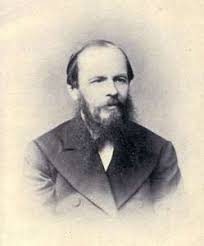
“Above all, don’t lie to yourself. The man who lies to himself and listens to his own lie comes to a point that he cannot distinguish the truth within him, or around him, and so loses all respect for himself and for others. And having no respect he ceases to love” -Fyodor Dostoevsky

I’ve made this same resolution in my head countless times yet I still fear that I may eventually fail to heed this advice. If I begin coming to conclusions without considering other possibilities I run the risk of perpetuating unjust causes. Even worse, if I find myself wrapped up in countless untruths and chains of reasoning derived from those untruths, I may become so disillusioned with the entire world that I stop wishing to find the actual truth. More than once I have gone down a rabbit hole of reflection only to find that patterns I’d resolved to represent some underlying truth could be disproven by numerous counterexamples. It is alluring, after having spent so much time coming to such conclusions and having invested myself in the actions I proposed to take as a result of them, to ignore clear counterexamples and continue my chain of reasoning. But such a cowardly and weak decision would certainly be fatal. 

For example, today I considered the motivations of a co-worker of mine who tends to get bossy despite his relative ignorance in our field to my own. I’ve been doing landscaping for 4 years and him only a few months. He ordered me, in a casual manner, to blow grass off part of a driveway which I was already approaching with a leaf blower. To my regret, I allowed this harmless action to represent vicious undermining and I became infuriated. I didn’t show him this fury in any way, I at least strive to portray a good temperament, but my mind flooded with hateful thoughts about his character. Within a few minutes of consideration, I’d determined that my co-worker was an insecure, helpless, and stupid person. Had I committed myself to this way of thinking I might have never seen another positive trait in the guy. Thankfully, I later recognized my unfairness in resolving such a hasty judgment of his character for an ultimately inconsequential action that was in all likelihood made with innocent intentions. This event, which occurred the very day I am writing this, shows my own vulnerability to the danger of lying to oneself. 

It is unsettling to consider the possibility that resolutions which have guided my each and every action for extended periods of time could possibly be unwarranted but considering just how numerous and rash my most deeply held convictions are, a plurality are certain to be misguided. I resolve to regard this as the natural human condition. We all have our own unique beliefs. In all likelihood, every one of us holds misguided judgments. The danger, then, does not lie in being wrong, but in ignoring or avoiding evidence which proves our mistakenness. It is our duty to uphold the convictions which we resolve to hold so long as we reevaluate their validity often. 

As I continue to fulfill my passion for understanding life I will scrutinize my each and every conviction in perpetuity. All that I have thought or ever will think will be subject to every conceivable criticism available. I may act upon and base further reasoning on ideas which have yet to be disproven, but I will not allow any truth, no matter how convincing, to represent an intellectual bedrock that ceases to undergo my frequent reconsideration.

In the words of Socrates: “The only true wisdom is in knowing you know nothing.”

Too much sanity may be madness and the maddest of all, to see life as it is and not as it should be. -Miguel de Cervantes

Studying extraordinary people who accomplish things that change the entire world forever makes me sad. I loathe the truth that my adventure, the goals, opportunities, choices, and struggles that characterize my life, is ultimately inconsequential. It is inconsequential both in the sense of its having no extended effect on the lives of other people and its paling in comparison in terms of scale and excitement to the adventures of extraordinary people. How can I return to my own adventure with the whole of my enthusiasm after immersing myself in the epic lives of those extraordinary people who changed the world forever? 

To answer this haunting question and prevent myself from resigning to the belief that my life is meaningless, I must first conclude what variables measure the “meaning” of one’s life relative to another’s. I take for example the people in my own life who have the most impact on me: my close friends and family. The actions they take on a daily basis have a direct impact on me and others close to them, more specifically our emotions. When my father chooses to endure the stress of his work so he can afford to support our family it makes me, my mother, and my brother happy. The meaning of his struggle is to provide for his family so that their emotions may be made more positive. When my mother completes housework, cares for my brother and me, and cooks meals for the family she improves our happiness. Beyond improving my present happiness their actions have the extended effect of improving my general propensity for happiness. My father’s work ensures I’ll have some extra money to ease the burden of my future student loan debt and my mother’s housework ensures guests retain a high opinion of our family so that I may make connections with others. Their actions are meaningful because of the resulting effects on my well-being. This suggests that the meaningfulness of an individual’s life can be measured by the extent to which their actions affect the past, present, and future emotions of others. 

By this metric, those extraordinary people whose achievements I cannot help but envy are shown to be far less meaningful in my own life than the actions of the people closest to me. Despite my loved ones being far less impactful on a grand scale, their effect on my happiness is infinitely greater. They don’t do anything that changes the entire world, but the things they’ve done have certainly changed my entire world. One’s impact does not have to be broad to be significant. I might not affect every person in the entire world, and my adventure may not be a glamorous thing to look at, but my actions will certainly be meaningful because they’ll improve the experience of life for other people. 

If the meaningfulness of one’s life is determined by the effect their actions have on others’ experiences, then the most meaningful and virtuous life is lived in service of as many people as possible with as much positive consequence for those people’s lives as possible.  In order to achieve the full potential for meaningfulness which my life has to offer, I must evaluate options for what service I should provide, how I should provide that service, and which people I should serve.

It bewilders me how many people resolve to live their lives with relatively meager ambitions. As a young person, I suppose I know much more about the opportunities of life than I do about the harsh realities which one must face to seize those opportunities. However, this recognition of my own ignorance does not ease my bewilderment. Many opportunities are so alluring that I cannot even fathom a hardship which could possibly dissuade me from attempting to seize them.

The recognition of hardships which must be faced before achieving one’s goals represents the “sanity” which Cervantes warns us of in this quote. If we consider the future carefully before taking action we act with sanity. “Sanity”, can then be identified as the seeing of life as it is in most practical and realistic terms. Cervantes equates using too much of this seemingly logical thinking to madness. If we only ever think of the world in terms of what we know and what we can most logically expect then naturally we will never achieve anything extraordinary. We must see the world “as it should be” despite the obstacles which stand in our path to achieving that end.

I’m not saying that all sanity should be thrown to the wind. Merely that a little insanity is necessary for people to reach their full potential. Without any sanity, one might seek to achieve their dream of flying by jumping off a cliff, with too much sanity they would dismiss their dream of flying as a ridiculous goal, but with some sanity and a little bit of insanity they might invent the airplane. Extraordinary things are only accomplished by people who seek to make their extraordinary dreams a reality. Spend less time thinking about how you would achieve a certain goal and more time achieving it.


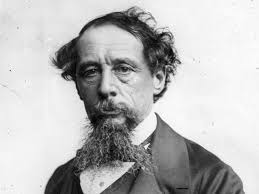
Have a heart that never hardens, and a temper that never tires, and a touch that never hurts. -Charles Dickens

This quote is pretty straightforward. Dickens refers to three characteristics of a man: his heart, his temper, and his touch. He urges the reader never to change in any of these qualities which implies that the qualities mentioned are virtuous and the events of one’s life will naturally pull them away from virtue. Basically, this world is going to do everything it can to change you and often it will not be for the best.

The first of the three qualities mentioned, the heart, is popularly used to symbolize emotion, compassion, and love. Dickens states that the heart should never “harden” so we can infer it is best to have a soft heart. In other words, to be very sympathetic. Next, we are instructed to have a “temper that never tires.” This line is especially self-explanatory; keep calm when things aren’t going your way. Finally, Dickens advises us to have “a touch that never hurts.” When you touch other people it should not be to hurt them. If we’re touching people and it’s not with the intent to harm them then it’s probably to show affection. In summation Dickens wants us to be compassionate towards others, patient in the face of adversity, and gentle in our physical conduct despite what the events of the world may urge us to do.

In reading this quote I find myself most interested by the idea that the world naturally pulls us away from virtue. The whole concept suggests that an individual’s goodness is alien to an otherwise morally indifferent if not evil world. If our environment does not have morality then how are we to believe that the virtue in our character is a product of our upbringing? It is impossible. Virtue is somehow present in our character despite the events of the world which would naturally destroy it, much less create it. If this is starting to sound like an argument for an objective moral authority, then that’s because it is. Under normal circumstances I would say “buckle up, atheists” and try to explain just what the hell I’m talking about here, but this is my first quote analysis and I wouldn’t want to scare away my make-believe audience already.

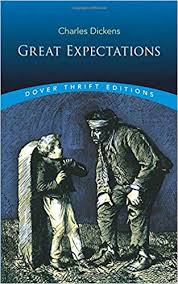
I actually just finished reading Dickens’s Victorian novel “Great Expectations” and can honestly recommend it to any young person who thinks they’ve got the whole world figured out. (Spoiler: they don’t) The book is basically about this bright young kid who resolves one day that life is all about wealth, social advancement, and class. He leaves his loving and affectionate poor family to pursue a life as a gentleman in the city. However, the events which unfold in his adult years reveal he’s made a terrible mistake. His most valuable possession turns out to be the loyal family he had all but forgotten about.

The lesson I gather, aside obviously from the ‘”affection, loyalty, and conscience are more important than social advancement, wealth, and class” theme, is that we need to be careful of resolving our minds one way or another without considering other possibilities. That bright young kid decided one day that the only way he could be happy is if he becomes a wealthy gentleman and he wastes the best years of his life pursuing that goal. People need to take a moment and reevaluate their goals once in a while or they’ll end up so lost that they forget why they were headed where they were in the first place. Obviously you should still figure out what is important to you and stick to your principles, but you must take time to reflect on new experiences. Don’t be afraid to change your mind.

P.S. This applies to what I’m saying here. My word is not gospel. I’m an 18-year-old in high school. Please do not hesitate to criticize or ignore what I say. My future self certainly will.